
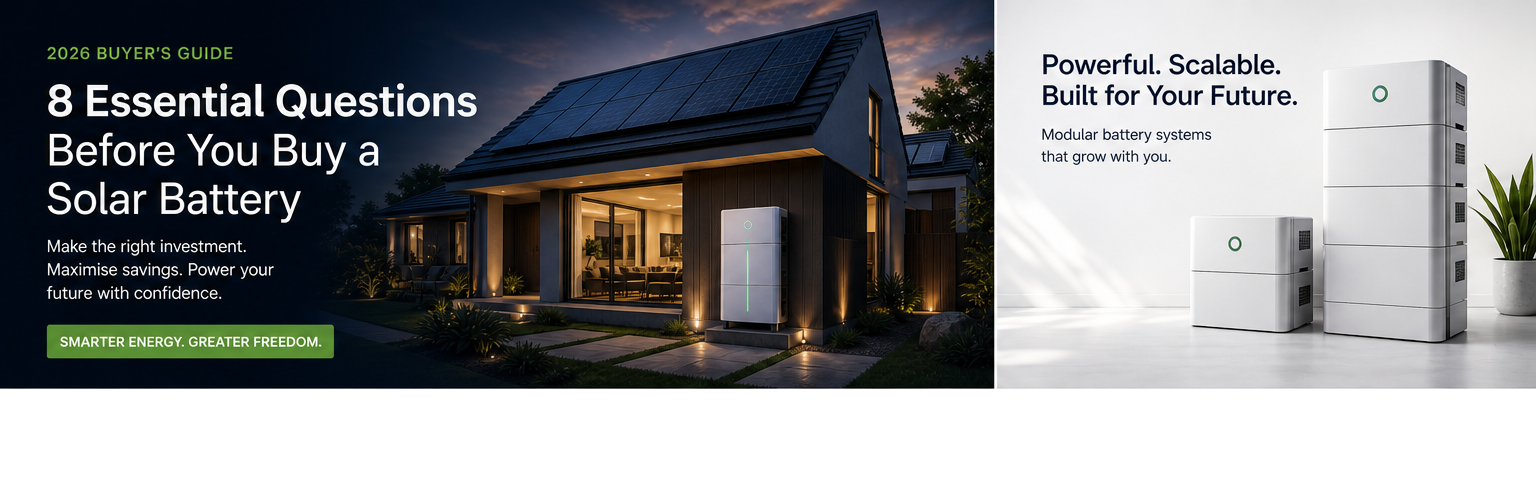
8 Questions to Ask Before Buying a Solar Battery in 2026

If you’re considering investing in a solar battery in 2026, you’re not alone. With so many options on the market, it’s easy to be drawn in by low prices and big promises. However, choosing the right system requires careful consideration to ensure you get real long-term value.
Efficient Energy Group has put together 8 essential questions you should ask before purchasing a solar battery, helping you avoid costly mistakes and make a smarter investment.
Key Takeaways
- Cheap batteries often cost more in the long run due to poor lifespan and weak warranties
- Stackable systems allow you to expand your storage without reworking your setup
- Look for batteries with at least a 10-year warranty and proven lifecycle performance
- Instant backup power is critical to avoid outages during blackouts
Will This Solar Battery Save Me More Than It Costs?
A low upfront price might look appealing, but cheaper solar batteries often come with trade-offs:
- Shorter lifespan
- Unreliable or limited warranties
- More complex or costly installation
Investing in quality upfront typically results in better long-term savings and performance.
Can I Expand My Battery Storage Later?
Flexibility is key when choosing a solar battery system. The best options should:
- Be fully stackable
- Allow easy expansion within an existing battery setup
- Have a clean, compact design that fits seamlessly into your space
This ensures your system can grow with your energy needs.
When Will This Battery Need Replacing?
Solar batteries are a long-term investment, so durability matters. Look for:
- A minimum 10-year warranty
- Strong capacity retention over time
- High lifecycle performance (number of recharge cycles)
- Independent lab testing to verify performance claims
Can This Battery Power My Home During a Blackout?

Not all batteries can support full-home backup. To ensure you’re covered:
- Understand your household’s daily energy usage (kWh)
- Compare it against the battery’s output capacity
- Ensure sufficient storage to run essential appliances during outages
How Long Will the Battery Last Before Recharging?
Battery runtime depends on your usage and storage capacity. While full-home backup may only be needed temporarily, it’s important your system can:
- Support critical appliances
- Provide reliable power during outages
- Deliver consistent performance when you need it most
Powering a full house shouldn’t be necessary for very long, but when you need backup power, it’s good to know your home solar installation has enough to keep your essential appliances running as normal.
Is There a Delay When Switching to Backup Power?
Some systems experience a delay when switching to battery power during a blackout. The best systems offer:
- Instant switchover
- No interruption to power supply
This ensures your lights and appliances continue running without disruption.
Will Installation Require Additional Costs Later?
If your battery system isn’t easily expandable, future upgrades may require costly modifications. Choosing a stackable system helps you:
- Avoid reinstallation costs
- Scale your system efficiently
- Future-proof your energy setup
Does This Battery Have a Reliable Warranty?
Even high-quality batteries can occasionally fail. A strong warranty ensures:
- Protection against defects
- Peace of mind
- No unexpected replacement costs
Bonus Tip: Always Choose CEC-Approved Products
The Clean Energy Council (CEC) ensures solar products meet strict Australian standards. Always check that your battery is CEC-approved to guarantee:
- Product quality
- Safety compliance
- Reliable performance
Frequently Asked Questions
What is Battery Capacity Retention?
This refers to how much of the battery’s original storage capacity remains over time or after a certain number of charge cycles.
Can Solar Batteries Charge Electric Vehicles?
Yes. Many modern systems support EV charging and may include apps to help manage and optimise energy use.
What is Energy Throughput?
Energy throughput measures how many times a battery can be fully charged and discharged over its lifetime. This helps determine its real-world durability beyond just warranty terms.
What Does CEC-Approved Mean?
CEC approval indicates the product has been tested and meets Australian standards for safety, performance, and reliability.
The Bottom Line
Choosing the right solar battery isn’t just about price — it’s about performance, reliability, and long-term value.
By asking the right questions and focusing on quality components, you can ensure your solar investment delivers real savings, greater energy independence, and peace of mind for years to come.
Check if your suburb qualifies
Check Your Eligibility Now
Enter your details to check your eligibility.
Efficient Energy Group can help guide you through your options and ensure you choose a system that’s built to last.